Mostrando entradas con la etiqueta History. Mostrar todas las entradas

miércoles, 27 de febrero de 2013

The Protestant Reform

 Martin Luther


 Martin Luther publicised The Ninety-Five Theses in 1517 in Wittenberg, challenging the Roman Catholic Church and initiating the Protestant Reformation. A separate Lutheran church became the official religion in many German states after 1530. Religious conflict led to the Thirty Years' War (1618–1648), which devastated German lands. The population of the German states was reduced by about 30%. The Peace of Westphalia (1648) ended religious warfare among the German states, but the empire was de facto divided into numerous independent principalities. In the 18th century, the Holy Roman Empire consisted of approximately 1,800 such territories. From 1740 onwards, dualism between the Austrian Habsburg Monarchy and the Kingdom of Prussia dominated German history. In 1806, the Imperium was overrun and dissolved as a result of the Napoleonic Wars.


lunes, 17 de diciembre de 2012

Germanic peoples

The Germanic peoples (also called Teutonic or Gothic in older literature) are an Indo-European ethno-linguistic group of Northern European origin, identified by their use of the Germanic languages which diversified out of Proto-Germanic during the Pre-Roman Iron Age.

The term "Germanic" originated in classical times, when groups of tribes were referred to using this term by Roman authors. For them, the term was not necessarily based upon language, but rather referred to tribal groups and alliances who were considered less civilized, and more physically hardened, than the Celtic Gauls living in the region of modern France. Tribes referred to as Germanic in that period lived generally to the north and east of the Gauls.


Classification

 The distribution of the primary Germanic dialect groups in Europe in around AD 1:
                            North Germanic
  North Sea Germanic, or Ingvaeonic
  Weser-Rhine Germanic, or Istvaeonic
  Elbe Germanic, or Irminonic


Origins

Regarding the question of ethnic origins, evidence developed by archaeologists and linguists suggests that a people or group of peoples sharing a common material culture dwelt in a region defined by the Nordic Bronze Age culture between 1700 BCE and 600 BCE. The Germanic tribes then inhabited southern Scandinavia, Schleswig-Holsteinand Hamburg, but subsequent Iron Age cultures of the same region, likeWessenstedt (800 to 600 BCE) and Jastorf, are also in consideration. The change ofProto-Indo-European to Proto-Germanic has been defined by the first sound shift (orGrimm's law) and must have occurred when mutually intelligible dialects or languages in a Sprachbund were still able to convey such a change to the whole region. So far it has been impossible to date this event conclusively.


The precise interaction between these peoples is not known; however, they are tied together and influenced by regional features and migration patterns linked to prehistoric cultures like Hügelgräber, Urnfield, and La Tene. A deteriorating climate in Scandinavia around 850 BCE to 760 BCE and a later and more rapid one around 650 BCE might have triggered migrations to the coast of Eastern Germany and further toward the Vistula. A contemporary northern expansion of Hallstatt drew part of these peoples into the Celtic hemisphere, including nordwestblock areas and the region of Elp culture (1800 BCE to 800 BCE).

At around this time, this culture became influenced by Hallstatt techniques for extracting bog iron from the ore in peat bogs, ushering in the Pre-Roman Iron Age. 


lunes, 10 de diciembre de 2012

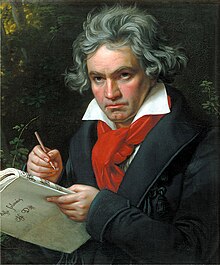
Ludwig van Beethoven


Signature of Ludwig van Beethoven
Ludwig van Beethoven  baptized 17 December 1770 – 26 March 1827) was a German composer and pianist. A crucial figure in the transition between the Classical and Romantic eras in Western art music, he remains one of the most famous and influential of all composers. His best known compositions include 9 symphonies, 5 concertos for piano, 32 piano sonatas, and 16 string quartets. He also composed other chamber music, choral works (including the celebrated Missa Solemnis), and songs.

Born in Bonn, then the capital of the Electorate of Cologne and part of the Holy Roman Empire, Beethoven displayed his musical talents at an early age and was taught by his father Johann van Beethoven and Christian Gottlob Neefe. During his first 22 years in Bonn, Beethoven intended to study with Wolfgang Amadeus Mozart and befriended Joseph Haydn. Beethoven moved to Vienna in 1792 and began studying with Haydn, quickly gaining a reputation as a virtuoso pianist. He lived in Vienna until his death. During the late 18th century, his hearing began to deteriorate significantly, yet he continued to compose, conduct, and perform after becoming completely deaf.


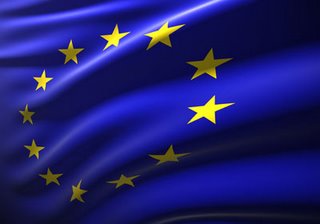
The Hymn of Joy is today, the European Union
anthem.
                                             
                                           Beethoven's Ninth Symphony. The Hymn of Joy.

sábado, 24 de noviembre de 2012

THE BERLIN'S WALL


The Berlin's wall is in Berlin. This wall was big and separated one part of berlin because the first part of the germany's wall was socialist GDR. The other part of the Berlins's wall wasn't socialist GDR.

This is the Berlin's wall.

The oriental wall dominated by the soviets officially held that the wall pick up to protect it was population from fascist elements.

The plan of building the Berlin's Wall was a secret of the German administration. The wall was built at the behest of the socialist unity party of Germany.


This video shows what happened at this stage in the history of Germany.

viernes, 23 de noviembre de 2012

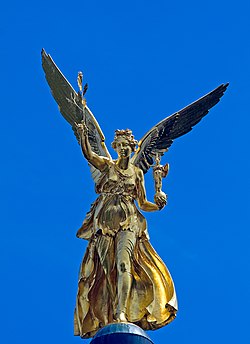
Angel of Peace


The Angel of Peace is a monument in Munich.

The angel is a reminder of the 25 paceful years after the Franco-Geman war in 1870-1871. In the hall of the temple are gold mosaics.

The sculpture was made of molten bronze and covered of gold, there was a job maked by Heinrich Düll, Georg Pezold y Max Heilmaie famous german artists.


The first stone was laid on 10 May 1896; they finished it on 16 July 1899.

When the Angel fell from the column in 1981, lots of damages could be repared. After having the accident, the angel was put back on this column in 1983. Their legs and wingss could be repared too.

martes, 20 de noviembre de 2012

German Confederation and Empire

Following the fall of Napoleon, the Congress of Vienna convened in 1814 and founded the German Confederation (Deutscher Bund), a loose league of 39 sovereign states. Disagreement with restoration politics partly led to the rise of liberal movements, followed by new measures of repression by Austrian statesman Metternich. The Zollverein, a tariff union, furthered economic unity in the German states. National and liberal ideals of the French Revolution gained increasing support among many, especially young, Germans. In the light of a series of revolutionary movements in Europe, which established a republic in France, intellectuals and commoners started the Revolutions of 1848 in the German states. King Frederick William IV of Prussia was offered the title of Emperor, but with a loss of power; he rejected the crown and the proposed constitution, leading to a temporary setback for the movement.
 
File:German Reich1.png
 
File:Wernerprokla.jpg
Foundation of the German Empire in Versailles, 1871. Bismarck is at the centre in a white uniform


martes, 13 de noviembre de 2012

Wars of unification

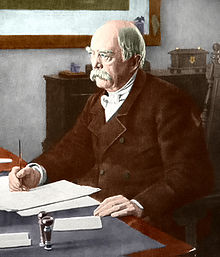
Otto von Bismarck
In 1862 King Wilhelm I appointed Otto von Bismarck as Prime Minister of Prussia. Bismarck was determined to defeat both the liberals and conservatives and increase Prussian supremacy and influence among the German states. There has been much debate as to whether Bismarck actually planned to create a united Germany when he set out on this journey, or whether he simply took advantage of the circumstances that fell into place. Certainly his memoirs paint a rosy picture of an idealist, but these were written with the benefit of hindsight. What is clear is that Bismarck curried support from large sections of the people by promising to lead the fight for greater German unification. He eventually guided Prussia through three wars which together brought William the position of German Emperor

sábado, 20 de octubre de 2012

Germany's Unification

Federico II El Grande

Germany's unification.

The history of Germany as a country begins in 1871 at the inception of the German Empire.

Germany was a group of states in the context of The Holy Roman Empire, formed from the division of the Carolingian Empire in 843, and founded in 800 by Carlomagno.


This Empire existed in various forms, until be divided in 1806 as a result of the Napoleonic wars.


During the eighteenth century Prussia becomes an European power. The long reign of Frederick the Great gave a great impetus to the consolidation of this kingdom. 


 Since then, Prussia will dispute to the House of Austria the hegemony of     Germany.


Prusian's Flag